11/03/2025 Fall colors and a little bit of everything
Chasing Fall Colors!
We’re starting to see some of the wintering birds arriving at Lake Hodges—a sure sign that the seasons are shifting. But before I dive into the latest sightings here at home, I want to take you somewhere new.
Recently, I had the chance to explore the White Mountains of Eastern Arizona—a place I’d never visited before. I was genuinely surprised by the beauty and the sense of remoteness that defines this region. The landscape felt untouched, with wide open skies and quiet forests that seemed a world away from the bustle of daily life.
I’m excited to share a few images from this trip. Sometimes, stepping outside our usual territory brings a fresh perspective and a renewed appreciation for the wild places we call home.
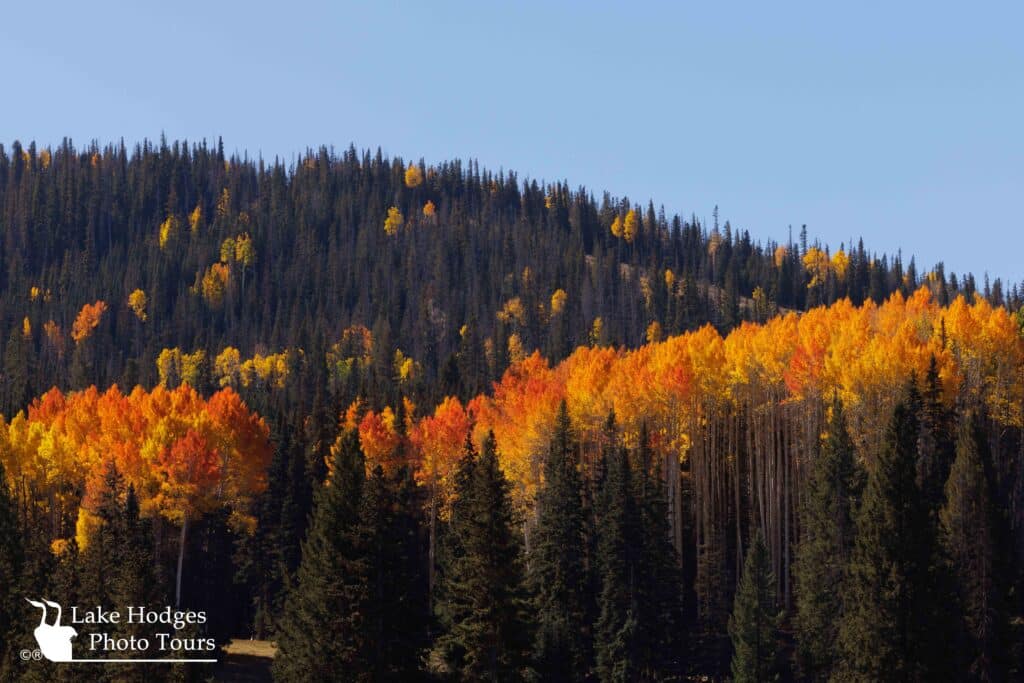
The vast landscape of the White Mountains took me by surprise. Huge swathes of Ponderosa Pine stretch across the hills, their deep green broken up by brilliant patches of golden orange and red aspen and cottonwoods. It’s a scene that feels both wild and peaceful—one of those places where you can stand still and just take in the quiet, the color, and the sheer scale of it all.
What struck me most was the contrast: the deep, steady green of the Ponderosa Pines set against bursts of gold and orange. It’s this interplay of color that really makes the landscape come alive—each stand of deciduous trees glowing all the brighter for being surrounded by the pines. As a photographer, I found myself drawn again and again to these pockets of color, trying to capture the way they stand out in the vastness of the forest.
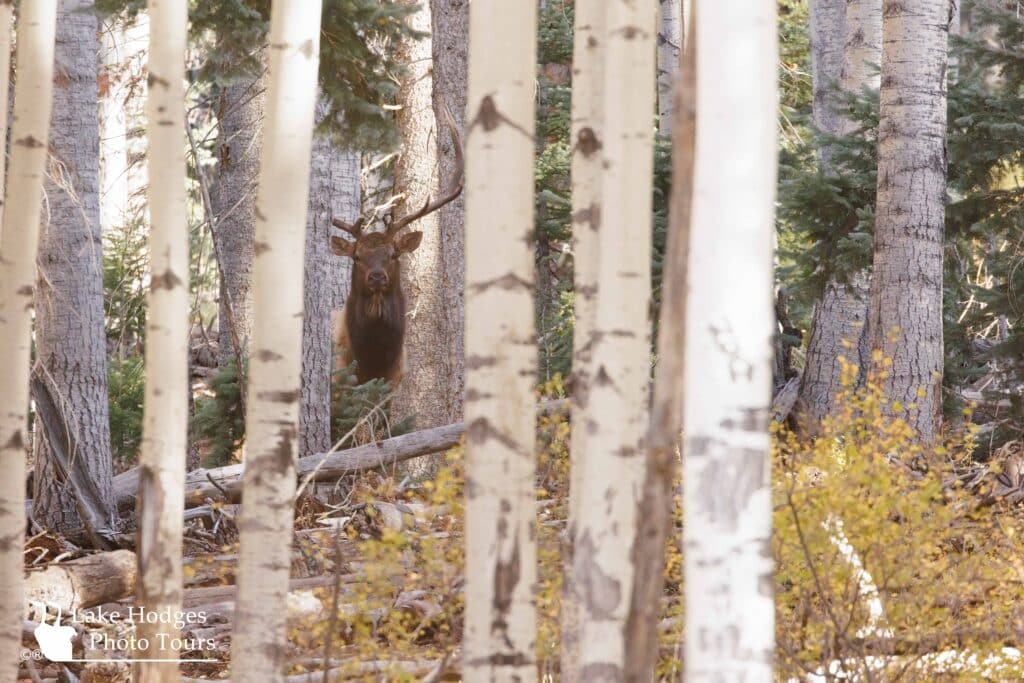
While pausing to photograph the scenery, the air was often filled with the haunting calls of bellowing elk echoing through the pines. There’s something about that sound that makes the mountains feel even wilder. If we stayed still long enough, we could hear the soft rustle of underbrush just off the road—a subtle reminder that we were never truly alone out there. Squinting through the boughs, we were lucky enough to spot a stag moving quietly among the trees. Moments like these are what keep me coming back to wild places: the chance to witness something extraordinary, if only for a few heartbeats.
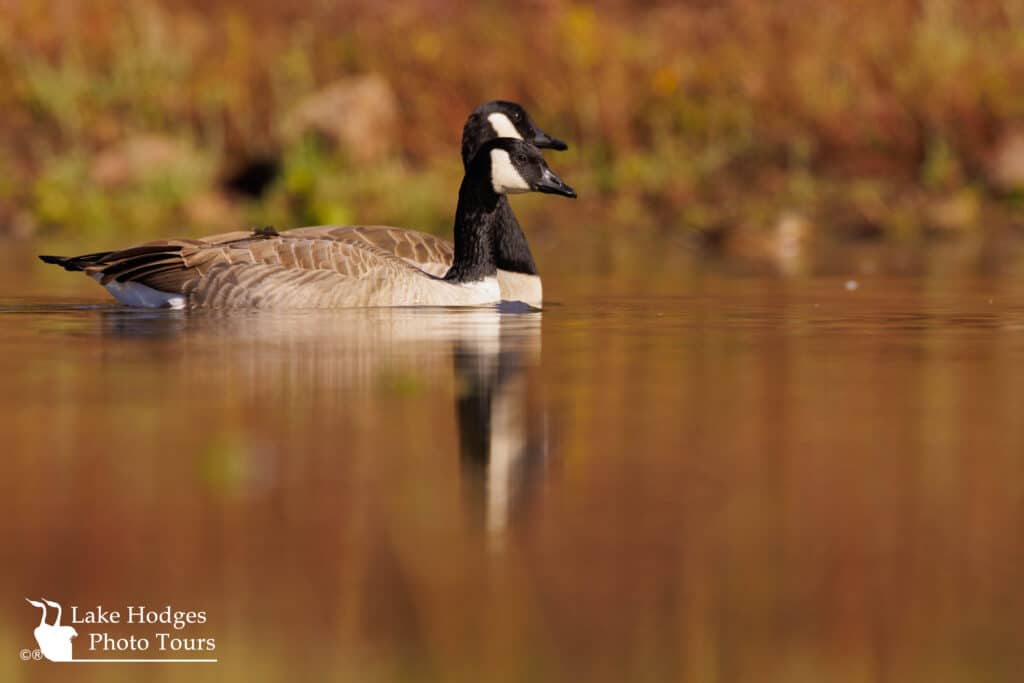
But it wasn’t just the landscape that was alive with color. Many of the local ponds were busy with migratory birds passing through—ducks, geese, and the occasional heron. Their plumage, set against the backdrop of autumn foliage, created reflections on the water that were just as vibrant as the trees themselves. Watching the golds and reds ripple across the surface, broken only by the gentle movement of the birds, was a reminder of how dynamic these wild places can be.
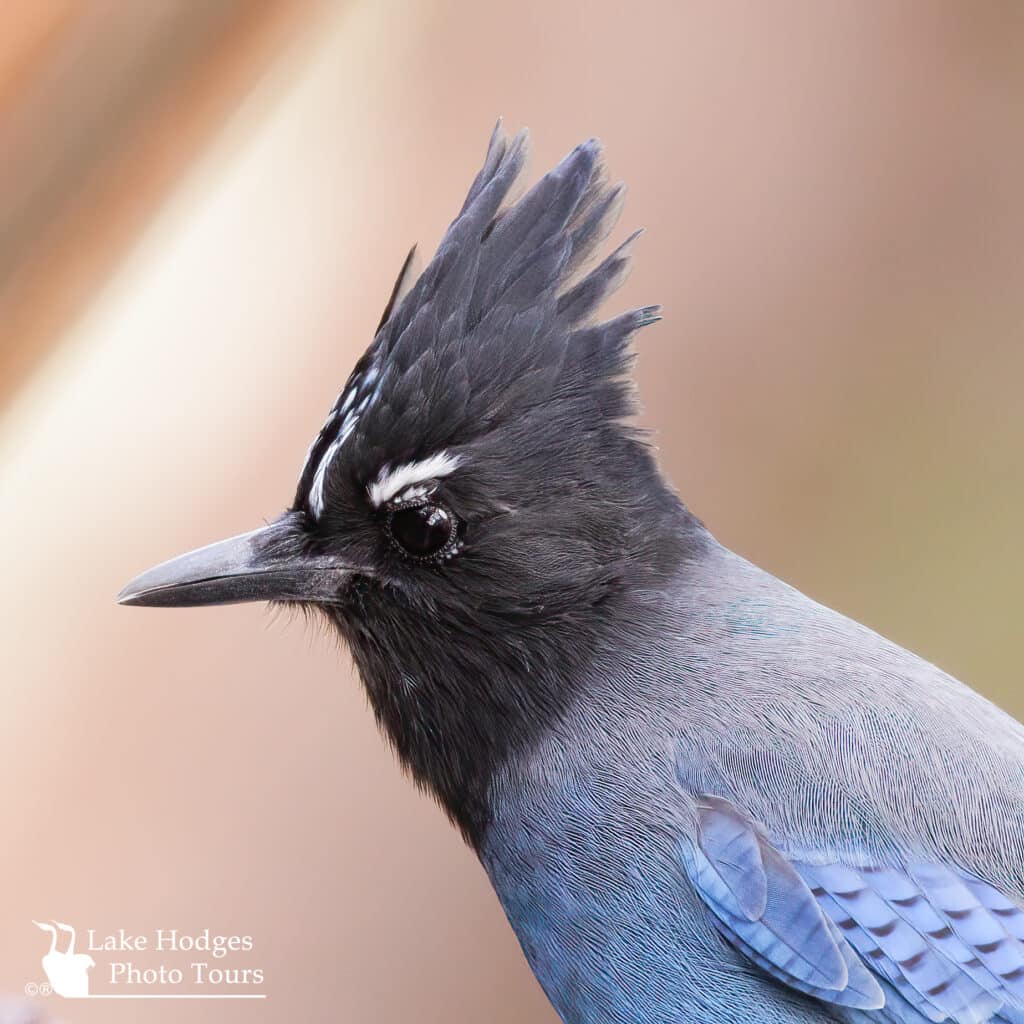
And of course, it wouldn’t be a trip to the mountains if I didn’t spend some time with one of my favorites—the Steller’s Jay. Their bold blue feathers and curious personalities always draw me in. This time, a close up was called for. There’s something about seeing a familiar bird in a new setting that makes the experience feel both fresh and comforting.
And wherever there are Steller’s Jays, you can usually find a Northern Flicker not too far behind. There’s a certain rhythm to their presence in the forest—one moment you’re watching the jays flash their blue wings through the aspens, and the next, you catch the warm, speckled plumage of a flicker working the trunks nearby. I always look forward to these encounters; it’s a reminder that every patch of woods has its own cast of characters, each playing their part in the changing season.
One of the more common birds I found was the Pygmy Nuthatch. These little acrobats rarely sit still for more than a second, so the real trick was trying to have them stay in one place long enough to get a decent shot. But when they did pause—just for a moment—the autumn foliage behind them made their subtle colors pop. It’s always a small triumph to capture a sharp image of such an active bird, especially when the background adds its own burst of color to the scene.
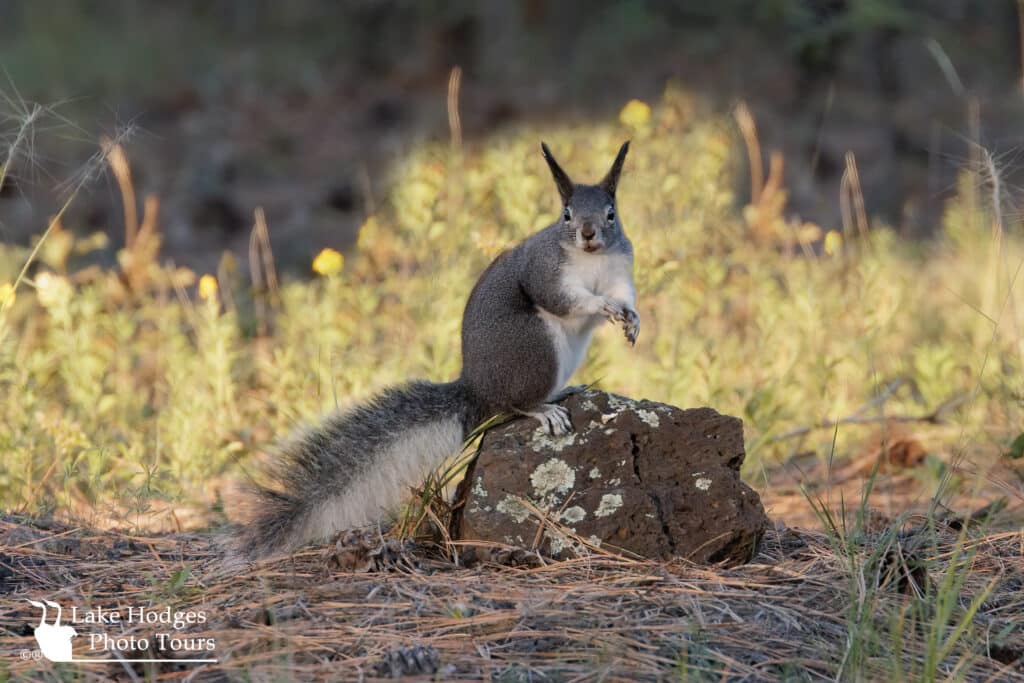
It’s not unusual to see chipmunks and squirrels whenever I head to the mountains, and this trip was no exception. Their quick movements and playful antics always bring a bit of energy to the forest floor. But this time, I was in for a treat—a new species for me: the Albert’s Squirrel. With its striking white tail and tufted ears, it stood out even among the autumn leaves. There’s something special about those unexpected sightings; they remind me that no matter how many times I visit, the mountains always have a new story to tell.
We’d heard that the Sandhill Cranes had arrived in southern Arizona, so on the way back to California we made a detour to Whitewater Draw to see the show for ourselves. We were not disappointed. Watching thousands of cranes gather on the wetlands was breathtaking, but what really struck me was the sound—a constant, rolling chorus that filled the air and seemed to vibrate through the ground itself. It’s one thing to see a migration like this, but to hear it—to feel it—reminds you just how alive these wild places are.
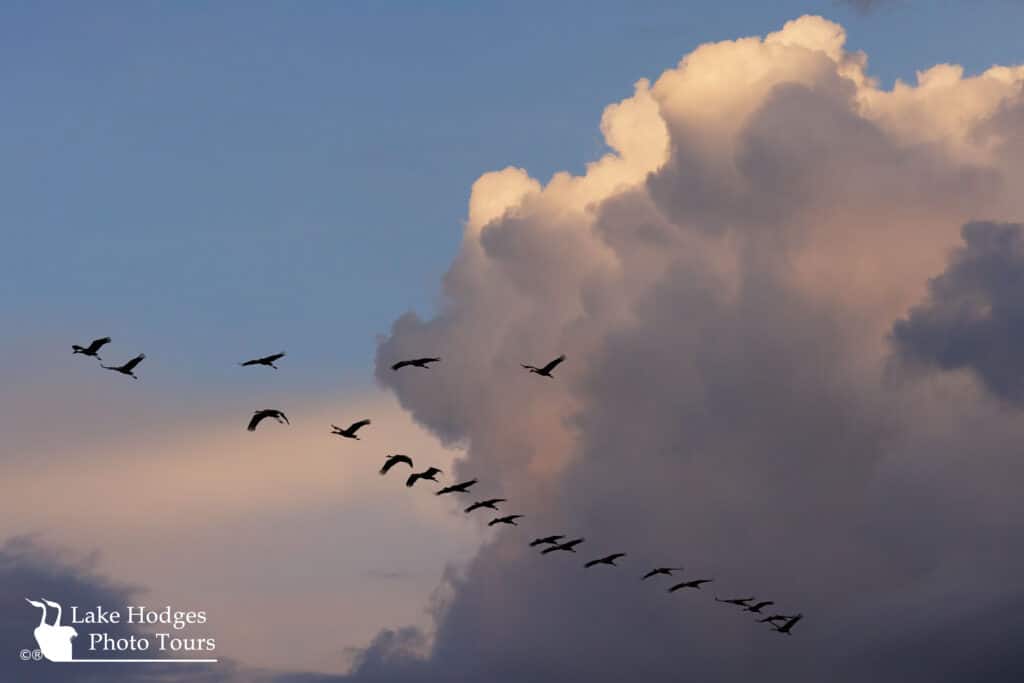
There are always plenty of opportunities to photograph the cranes—it really comes down to the conditions you’re graced with on any given day. When we first arrived, the sky was alive with thunderheads building in the distance. As the cranes made their way back to the ponds, their silhouettes stood out against the dramatic backdrop, offering a perfect chance to capture their elegant flying formations. Moments like these remind me that patience and a bit of luck are just as important as preparation in wildlife photography.
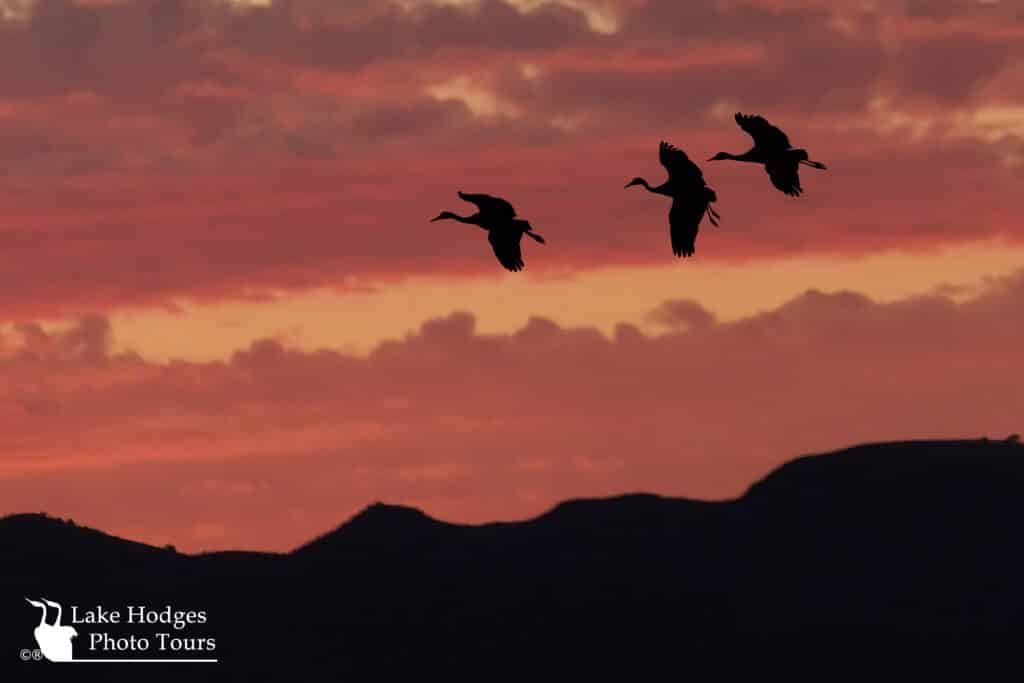
As the day wound down, those same thunderheads that had loomed in the distance made for a spectacular sunset. The sky lit up in shades of orange and purple, and a few stragglers—late-arriving cranes—flew in just as the light faded. Their silhouettes against the glowing clouds were a perfect end to the day, a reminder that sometimes the best moments come when you least expect them. It’s scenes like this that keep me coming back, camera in hand, always hoping for one more surprise.
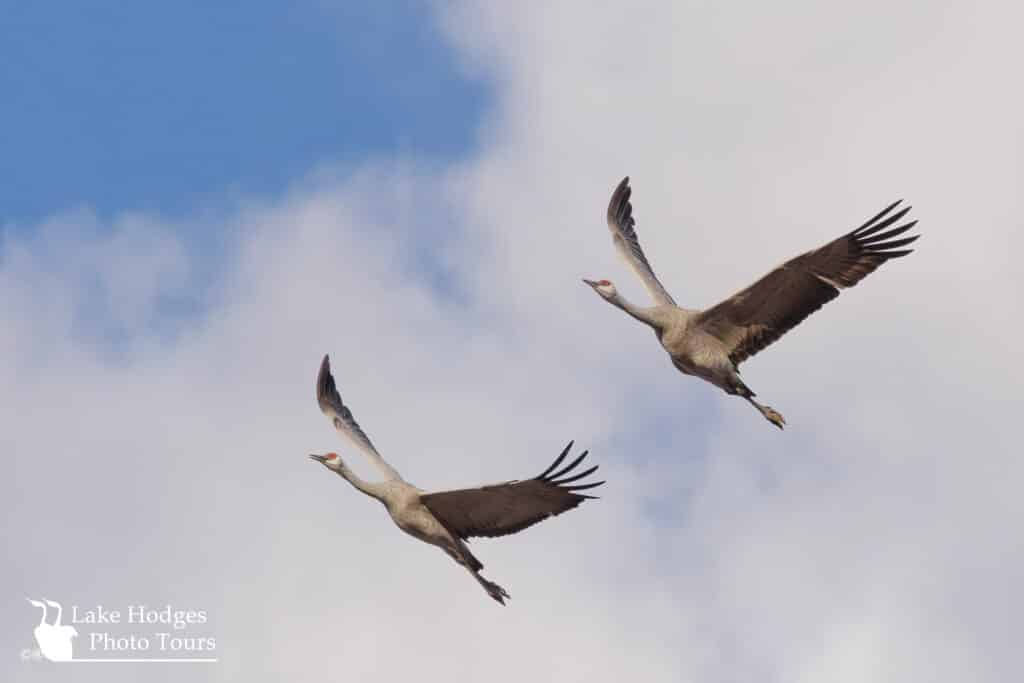
The following morning, we arrived just in time to watch the cranes heading out for the day. There’s something magical about seeing them lift off in the early light, their calls echoing across the water. As if to reward my patience, two of the cranes broke from the group and flew right overhead, their wings catching the sunrise. It felt like a fitting send-off—a reminder that, in nature, sometimes the best moments come to those who wait. A perfect way to wrap up the trip.
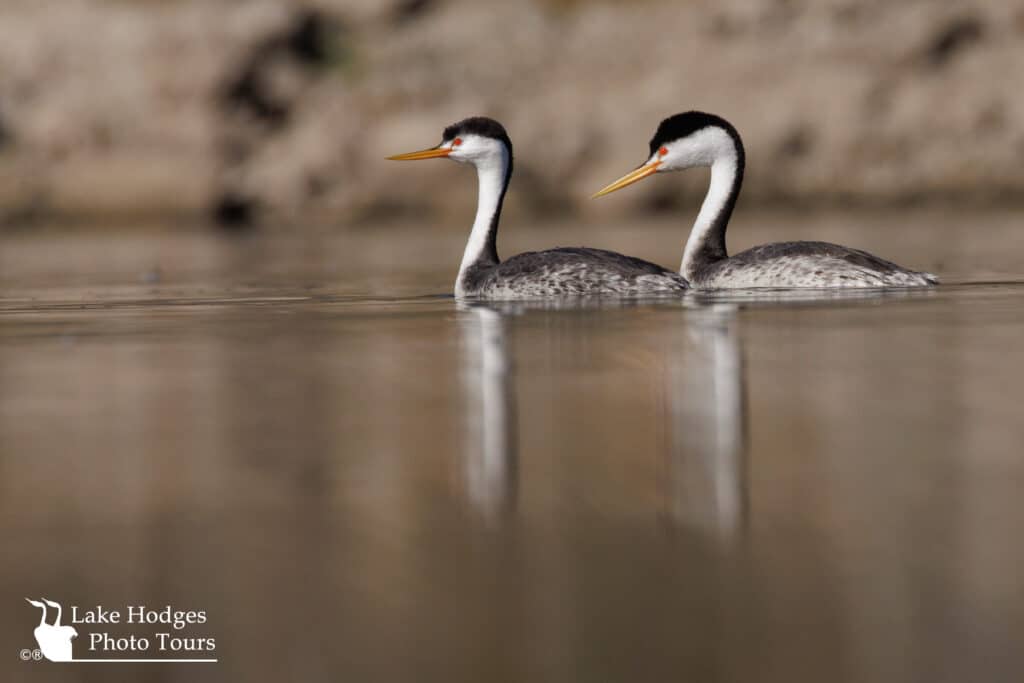
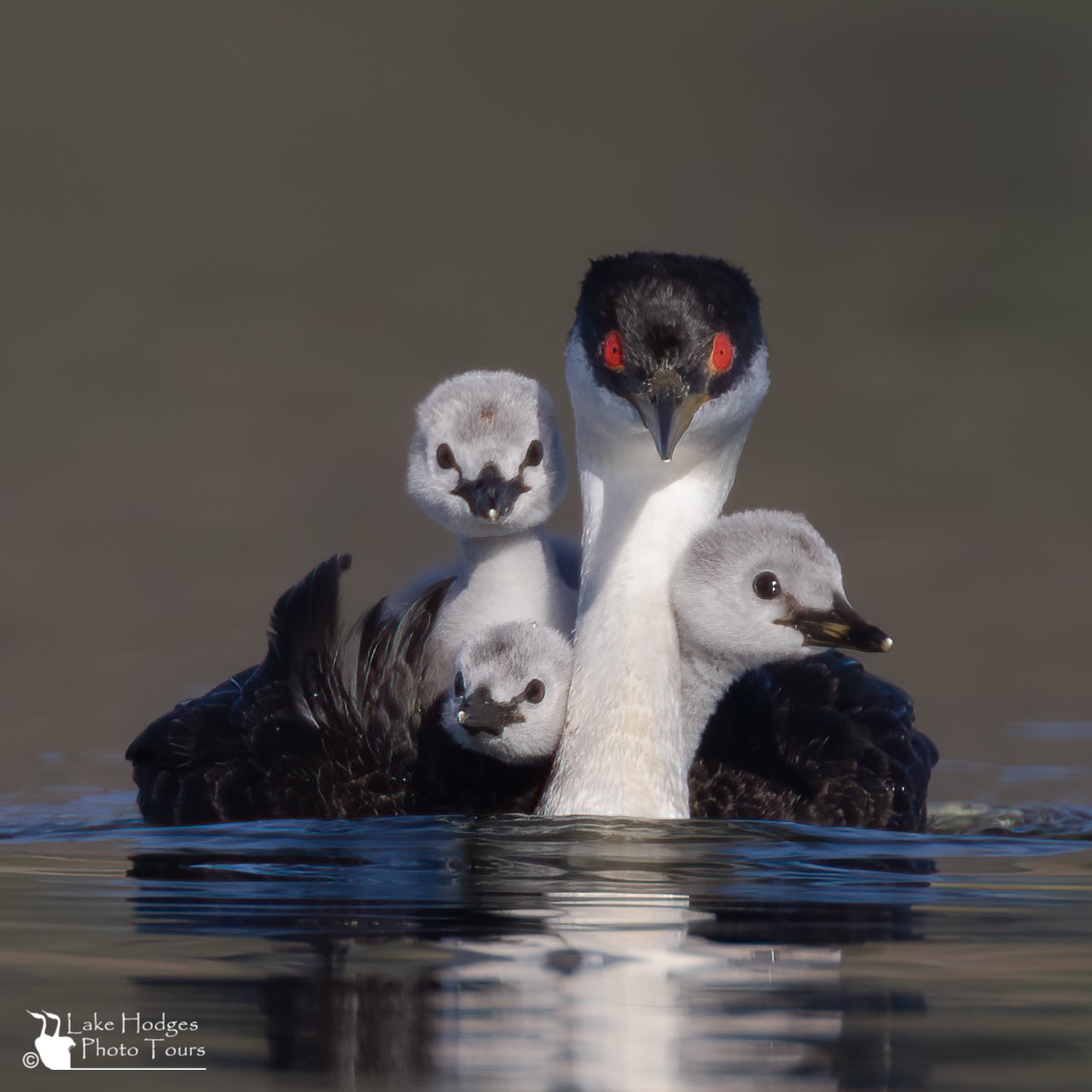
Returning to Lake Hodges, I was greeted by the familiar sight of grebes on the water. It looks like they’re starting to pair off, with the first signs of courtship beginning to unfold. Watching their subtle dances and calls, I can’t help but look forward to the coming season—there’s always something special about witnessing these rituals year after year. It’s a reminder that, even as the landscape changes, the rhythms of life at the lake continue on.
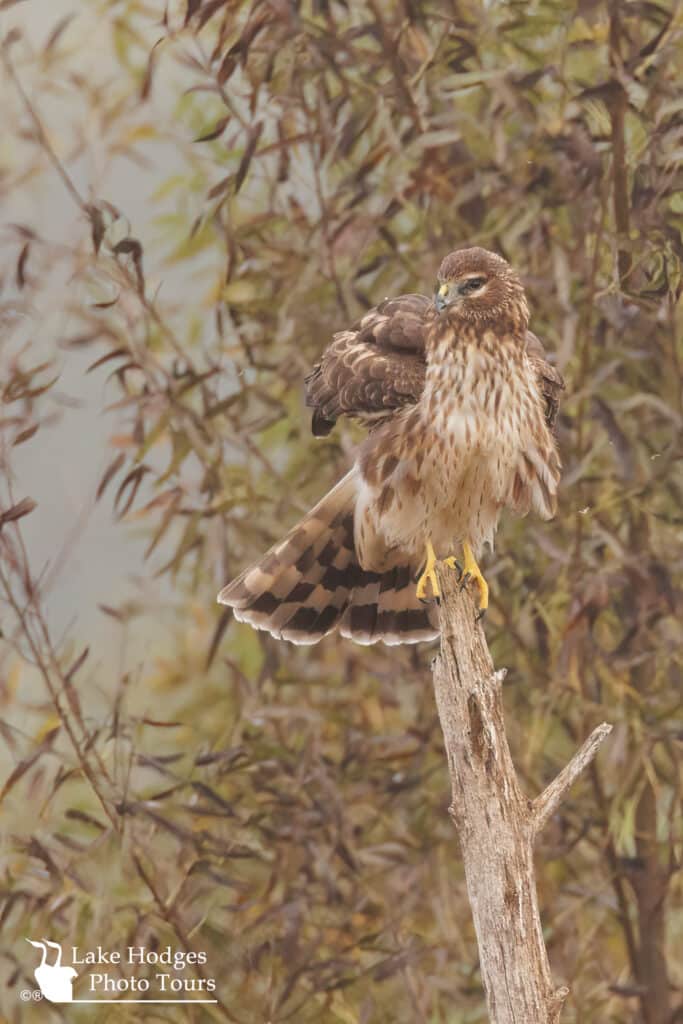
When walking the shore doing my recon I found many of the usual suspects. I spotted this Northern Harrier blending seamlessly into the brush—a true master of camouflage.
The Northern Harrier wasn’t the only master of disguise along the Lake Hodges shoreline—just as I was admiring its camouflage, a coyote slipped through the brush, only giving itself away by moving.
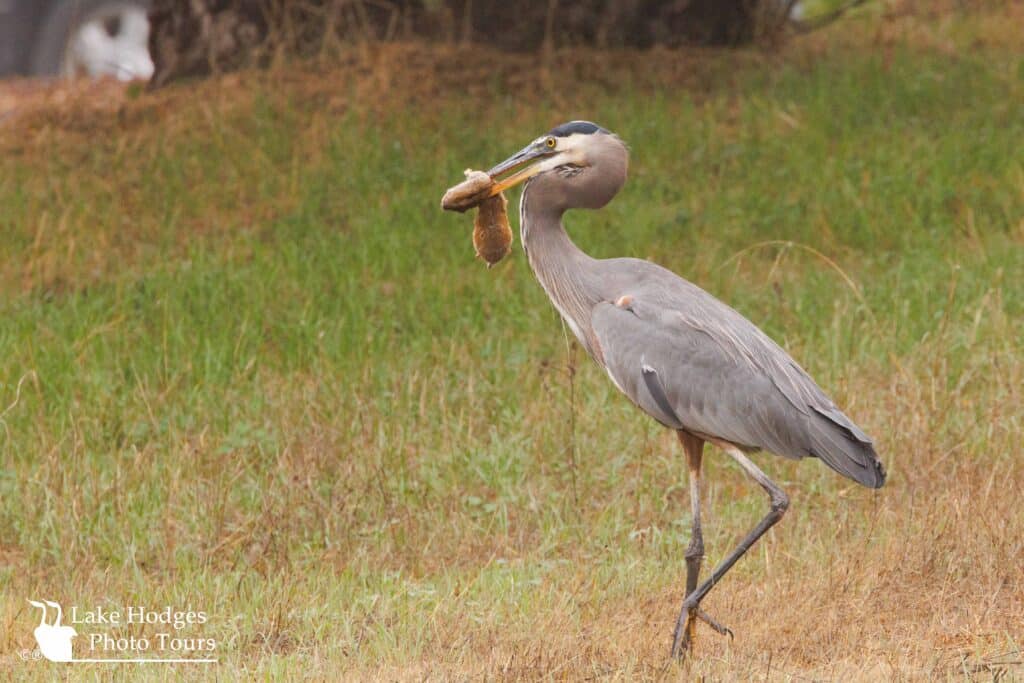
One of our local Great Blue Herons, usually a patient fisherman, decided the fishing wasn’t up to par that day. With the same stealth it uses at the water’s edge, the heron stalked the grass and, in a flash, snapped up a gopher.
And then, as if to cap off the morning, the raptor roost delivered a rare treat: a large immature Bald Eagle, likely a female, perched in regal solitude. Moments like these are why I return to the lake day after day, camera in hand and senses tuned to the subtle rhythms of the wild.
I am driven by a desire to connect people with the natural world, revealing the beauty and complexity of wildlife through my lens. This connection is not merely visual; it is an invitation to appreciate the delicate balance of ecosystems and the importance of conservation efforts. My experiences as a professional wildlife guide enrich my photography, allowing me to share insights about the behaviors and habitats of the creatures I encounter.
Please contact me directly by email if interested in heading out on the Lake or walking the area for any photography or videography. Feel free to share on your preferred Social Media, and subscribe at the foot of this page.
Until next time
And a reminder of my Website for purchasing my ART.
One of my favorite features of my online gallery is the room mockup tool. I know how important it is to feel confident that a piece of art will truly fit your space. With this tool, you can preview any print on a variety of room backgrounds, change the wall color, and even upload a photo of your actual room. It’s a simple way to see how a print will complement your décor before you buy—so you can bring a piece of Lake Hodges home with complete confidence.
If there’s a particular image you’ve seen on my social media or during a tour that isn’t yet available in the shop, just let me know. I’m always happy to upload high-resolution versions and help you find the perfect print for your space.
Please use the contact form below, if you have any general questions or requests about our services. We will try our best to respond back to you within 24 hours.